GoTo Webinar supports structured presentations, departmental events and training-oriented workflows. Its current Reach, Elevate and Complete offers separate audience capacity and advanced capabilities, so an alternative should be compared with the package your team actually needs. Older Lite, Standard and Pro price lists are not a useful basis for that decision.
Teams exploring GoToWebinar alternatives may want a different live production experience, a marketing-first campaign workflow or more integrated content reuse. Others want to keep existing conferencing tools while changing how they host larger audiences. These are different priorities, and they lead to different shortlists.
Below are seven options, starting with Sparkup, with ten features each, pricing conditions and direct comparisons. The goal is to help you match the webinar format and operating model before making a subscription decision.
Features and displayed pricing reviewed on November 10, 2026, using official documentation. Supplier currencies are retained; billing commitments, taxes and temporary offers can vary.
Best GoTo Webinar Alternatives at a Glance
- Sparkup: studio-quality production, active participation and detailed audience engagement analysis.
- Demio: best for Focused Marketing Webinars and Engagement Tracking.
- Livestorm: best for Enterprise webinar governance and integrations.
- Zoom Webinars: best for Large-audience webinars in the Zoom ecosystem.
- WebinarGeek: best for Live and Automated Webinars in One Program.
- Contrast: best for HubSpot-Connected Webinars and AI Content Reuse.
- EasyWebinar: best for Evergreen funnels with integrated follow-up.
The order groups different use cases rather than establishing an overall performance ranking. Choose the workflow your team needs before comparing starting prices.
Why Look for a GoTo Webinar Alternative?
Your Needs Sit Between Packages
The current EUR configuration lists Reach at €59/month monthly or €50/month billed annually, with one organizer and 500 participants. Elevate is €110/month monthly or €88/month billed annually for 1,000 participants. These are the current public packages, not the historical plans still found in older comparisons.
Reach includes reminders, polls, Q&A and reporting. Cloud recording, branding, simulive and breakout rooms are promoted under Elevate; certified training and paid events appear under Complete. A team needing one of those capabilities must evaluate the appropriate tier rather than using the Reach price for an advanced workflow.
Your Event Is Becoming a Produced Live Experience
A traditional presentation format may no longer cover a customer launch, interactive discussion or company event. The relevant question is how easily the producer can coordinate speakers, visual layouts, prerecorded material and audience contributions.
GoTo Webinar already offers engagement tools, so replacing it does not automatically make an event participatory. Plan the moments when the audience contributes and rehearse the actual production. A tool that supports your intended format can matter more than a longer list of loosely related features.
Marketing Operations Need a Different Handoff
A webinar can serve training, customer education or lead generation. Marketing teams may want campaign setup, engagement signals, CRM synchronization and recording reuse to form a continuous workflow, rather than treating delivery as the central job.
Map what happens after a session: who identifies interested contacts, where the data goes and how the recording becomes useful content. The right alternative should improve that process while preserving any required departmental controls, accessibility arrangements and training features.
The 7 Best GoTo Webinar Alternatives
1. Sparkup: Best for Studio-Quality Webinars That Bring the Audience Into the Event
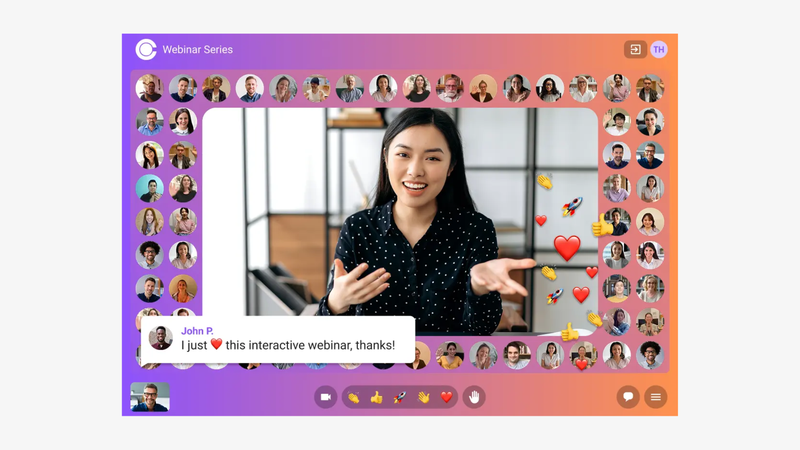
Sparkup gives teams a browser-based webinar studio for personalized, participative sessions. Organizers manage speakers, layouts and branding during the broadcast, with polls and selected questions displayed within the video. Invitations on stage and the participant mosaic available on Events give the audience a visible role in the experience.
For a team considering a move from GoTo Webinar, this workflow can suit customer events, launches and internal announcements that call for more visual production and real-time participation. Test the controls with the people who will run the session, then examine detailed engagement data to understand participation beyond attendance.
Rehearse a real live session with your producer and speakers, including attendee invitations and the Events-only Audience Mosaic. The decision should reflect the live format you want to create and the required subscription. GoTo Webinar already offers polls and Q&A; the reason to investigate is the specific production and participation experience.
Key features:
- Production studio operated from a browser.
- Custom video layouts and branded overlays.
- Registration pages with customizable forms.
- Branded reminder and follow-up emails.
- Polls displayed within the video experience.
- Audience chat and question management.
- Invitations for attendees to join the stage.
- Participant camera mosaic, available on Events and higher plans.
- Webinar recordings and replays.
- Participation and engagement analytics.
Best for: Marketing and communications teams that want polished live events, real-time participation and detailed audience engagement insights.
Strengths: Studio-quality video, accessible browser-based production, interactions within the video and detailed engagement analytics.
Considerations: The participant mosaic is available on Events. If automated sales campaigns are the main requirement, compare that workflow separately.
Pricing: Sparkup’s Webinar plan starts at €99/month with monthly billing, or €79/month billed annually, for 100 concurrent participants. Events starts at €159/month monthly, or €127/month billed annually, at the same capacity and includes Audience Mosaic. Subscriptions allow unlimited webinars, with simultaneous-session limits depending on the plan. A 14-day trial is available. The free plan streams to one external destination and does not host webinar audiences on Sparkup. Compare the Events price when Mosaic is essential.
Why choose it over GoTo Webinar? Consider Sparkup for customer events and internal communications that need a polished visual identity, accessible live production and visible audience contributions.
2. Demio: Best for Focused Marketing Webinars and Engagement Tracking
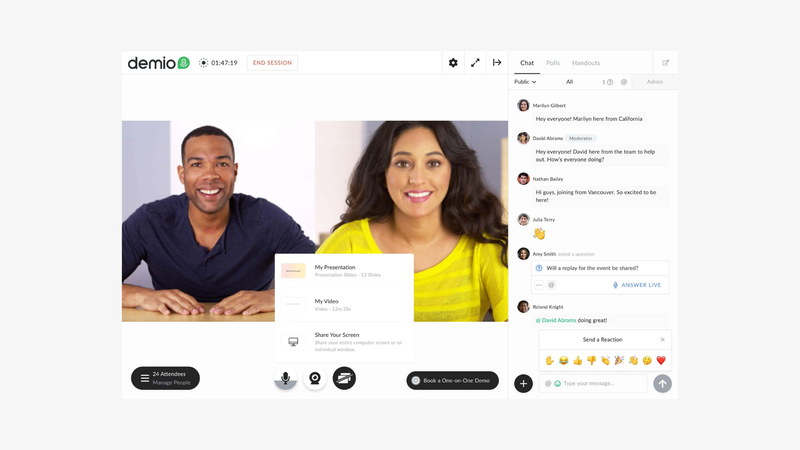
Demio puts the marketing webinar at the center of the workflow: attract registrants, deliver a presentation, capture engagement and use those signals in follow-up. It is a candidate for teams that want a dedicated event journey rather than a broader virtual-event environment. A useful evaluation should follow one prospect from sign-up through attendance and the eventual sales handoff. Its engagement tools include polls, downloadable resources and featured actions, so the comparison should consider how organizers deploy those tools during a real campaign. Teams running several programs should also check host licensing. A larger room, more simultaneous events and automated delivery are separate requirements that can change the package you need.
Follow one sample registrant through reminders, attendance, an interaction and the final sales handoff. Check host requirements and room size alongside the particular automation entitlement your campaign needs.
Key features:
- Live webinars and event series (Starter+).
- Automated and on-demand sessions (plan eligibility applies).
- Audience chat (available in the platform).
- Audience Q&A (available in the platform).
- Live polls (available in the platform).
- Downloadable handouts (available in the platform).
- Featured actions / CTAs (available in the platform).
- Screen sharing and uploaded presentation media (available in the platform).
- Invite audience members on stage (stage limits depend on plan).
- Engagement analytics (Starter+).
Best for: marketing teams prioritizing webinar engagement signals and lead follow-up.
Strengths: a dedicated marketing-event workflow with practical in-session conversion tools.
Considerations: Automation entitlements and host requirements depend on the package. Starter’s 50-attendee room should not be compared directly with a larger entry room elsewhere.
Pricing: Starter is $63/month with monthly billing or $45/month billed annually ($540/year, calculated), for 50 attendees and one host. Growth starts at $117/month per host billed annually at 150 attendees. Multiple hosts are needed for simultaneous events. The 14-day trial allows 20 attendees and sessions up to one hour. Check the automation entitlement, required room size and number of hosts before comparing the total with another provider’s subscription; the advertised starting price covers a specific configuration.
Why choose it over GoTo Webinar? Choose Demio over GoTo Webinar when a dedicated marketing-webinar journey and engagement follow-up is the priority and the relevant plan matches your event requirements.
3. Livestorm: Best for Enterprise webinar governance and integrations
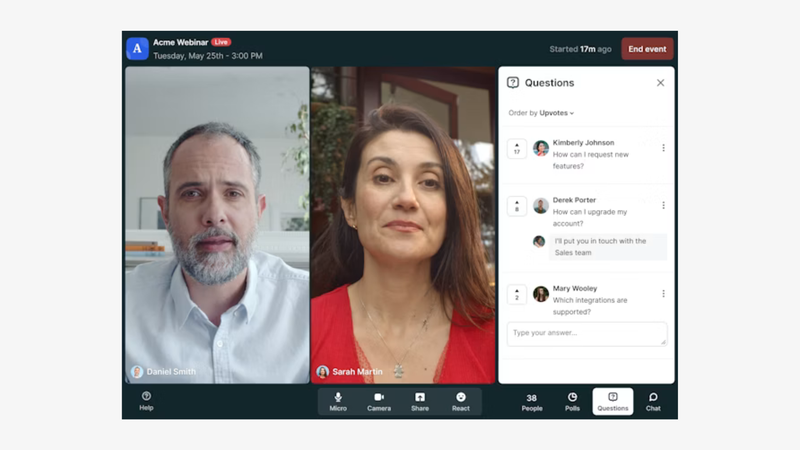
Livestorm is worth considering when webinar selection involves marketing, IT and procurement. Alongside registration, engagement and reporting, it documents security-management credentials and enterprise integrations that can matter to organizations with established approval processes.
Its browser-based workflow covers the event journey, from customized registration and email communications to audience interaction and post-event analysis. The useful question is how those capabilities fit your organization’s requirements: which CRM must receive the data, who needs access, and which security documents must a supplier provide?
Do not treat enterprise positioning as a substitute for checking the relevant offer. Integration availability varies by plan, and a supplier’s certification does not establish that another platform lacks appropriate security.
Involve the people responsible for CRM data, security review and purchasing. Test the required connector and estimate attendance across sessions before committing to the credit pack or an Enterprise contract.
Key features:
- Customizable webinar registration pages.
- Additional fields for collecting registration data.
- Automated reminder and follow-up email sequences.
- Event-room branding controls.
- Live audience polls.
- A dedicated questions-and-answers area.
- Recordings and on-demand webinar access.
- Engagement reporting.
- CRM connections, with some integrations requiring Enterprise.
- ISO 27001-certified information-security management, as documented by Livestorm.
Best for: organizations whose decision depends on security review, governance and a specific marketing integration.
Strengths: documented security credentials and a webinar workflow connected to enterprise systems.
Considerations: Salesforce, Marketo and certain other integrations require Enterprise. Its credit model also needs careful budgeting: unlimited events do not mean unlimited external attendance across those events.
Pricing: the 400-credit configuration displays €2.50 per attendee, equivalent to €1,000 for that yearly pack when calculated from the displayed rate. Each external attendee uses one credit per session attended. Returning for another session uses another credit; live attendance and replay viewing of the same session count once. Internal team members do not consume credits. Events are unlimited, and Enterprise uses custom pricing. Check the rate for your actual credit pack rather than extrapolating from this configuration.
Why choose it over GoTo Webinar? Choose Livestorm over GoTo Webinar when a required enterprise integration and documented governance is the priority and the relevant plan matches your event requirements.
4. Zoom Webinars: Best for Large-audience webinars in the Zoom ecosystem
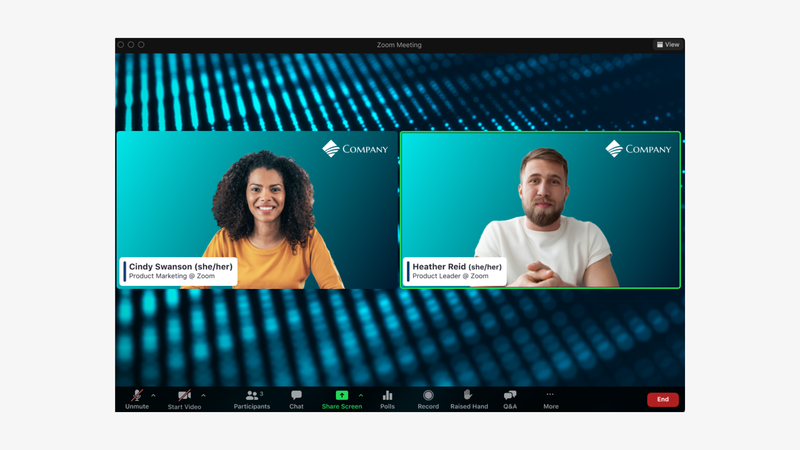
Zoom Webinars is a natural shortlist option for organizations already working with Zoom and planning structured broadcasts to larger audiences. It separates panelists from attendees and combines webinar-specific registration, interaction and reporting with familiar account administration.
There are distinct products to evaluate. Standard Webinars covers the core broadcast workflow. Webinars Plus adds production and delivery capabilities such as private backstage coordination and simulive sessions, which use prerecorded material in a scheduled event.
The decision therefore depends on both capacity and production needs. Familiarity can help a team get started, but it does not remove the need to rehearse the webinar controls, confirm attendee access and identify the exact license required for the planned experience.
Ask your account administrator to confirm the base license and the correct webinar package. Evaluate standard Webinars and Plus separately when layouts, backstage coordination or simulive delivery are required.
Key features:
- Webinar registration pages.
- Branded confirmation and reminder emails.
- Audience chat.
- Polls and quizzes.
- Moderated audience questions.
- Panelist invitation and management.
- Recordings with eligible smart-chapter features.
- Webinar performance reports.
- CRM integrations with connector configuration.
- Simulive delivery and backstage coordination on Webinars Plus.
Best for: organizations that prioritize audience capacity and alignment with their existing Zoom environment.
Strengths: tiered broadcast capacity and a choice between standard webinars and a more advanced production offering.
Considerations: do not assume Plus features are included in standard Webinars. Confirm account eligibility and any additional base-license cost before comparing the total with a standalone webinar subscription.
Pricing: the official plan cards list Webinars at $89/month with monthly billing or $66.67/month billed annually, in USD. The product page describes the entry offer for up to 500 attendees. Webinars Plus is listed at $99/month monthly or $82.50/month billed annually. These are displayed monthly equivalents, not a confirmed annual invoice total. Eligible account and webinar-license requirements apply; check the full purchase configuration, particularly if your organization does not already have the necessary Zoom account.
Why choose it over GoTo Webinar? Choose Zoom Webinars over GoTo Webinar when broadcast capacity within an existing Zoom environment is the priority and the relevant plan matches your event requirements.
5. WebinarGeek: Best for Live and Automated Webinars in One Program
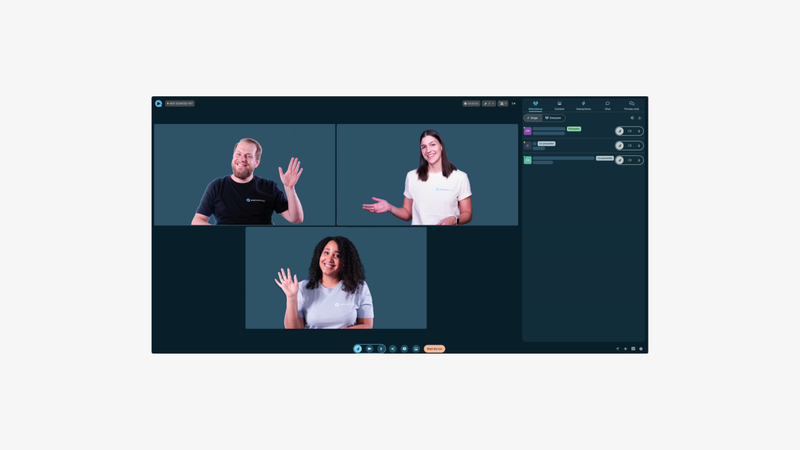
WebinarGeek brings live, automated, on-demand and hybrid delivery into one webinar program. Its appeal is the ability to choose the right format for a campaign without treating every event as a different software project. A live product discussion can sit alongside a repeat presentation and an on-demand library. The platform also documents registration, communications and interaction tools, so it is worth evaluating as a complete event workflow. Look beyond the headline bundle when connecting it to an established marketing stack. Premium’s optional CRM connectors and production extensions affect the total. Teams should test whether they need those additions or whether the included tools already cover their everyday sessions and reporting requirements.
Recreate the live, automated or hybrid session you run most often. Confirm account-user needs and paid CRM or RTMP add-ons before comparing the full configuration with the reference package.
Key features:
- Live webinar delivery (Premium+).
- Automated webinar scheduling (Premium+).
- On-demand webinars (Premium+).
- Hybrid live and prerecorded sessions (Premium+).
- Custom registration pages and fields.
- Automated reminder and follow-up emails.
- Public and private chat.
- Polls, quizzes and calls to action.
- Live captions (Premium+).
- HubSpot and Salesforce connections (Premium paid add-ons; included Enterprise).
Best for: teams combining recurring live sessions with automated and on-demand content.
Strengths: several delivery formats in Premium, with a broad event-management workflow.
Considerations: Premium starts with one account user; additional users and certain integrations cost extra. RTMP production is an add-on on Premium and included with Enterprise.
Pricing: Premium is €99/month on a monthly contract, or €59/month billed yearly (€708/year, calculated), at 75 live viewers per webinar. It includes unlimited webinars and sessions up to eight hours. Enterprise starts at €349/month billed yearly at 500 viewers, with a twelve-hour session limit. Premium’s HubSpot and Salesforce connectors are separately priced add-ons; the annual configuration lists €49/month each. A 14-day Premium trial is offered. Annual commitment paid monthly is a third billing option: do not confuse it with a monthly contract.
Why choose it over GoTo Webinar? Choose WebinarGeek over GoTo Webinar when multiple webinar formats within one recurring program is the priority and the relevant plan matches your event requirements.
6. Contrast: Best for HubSpot-Connected Webinars and AI Content Reuse
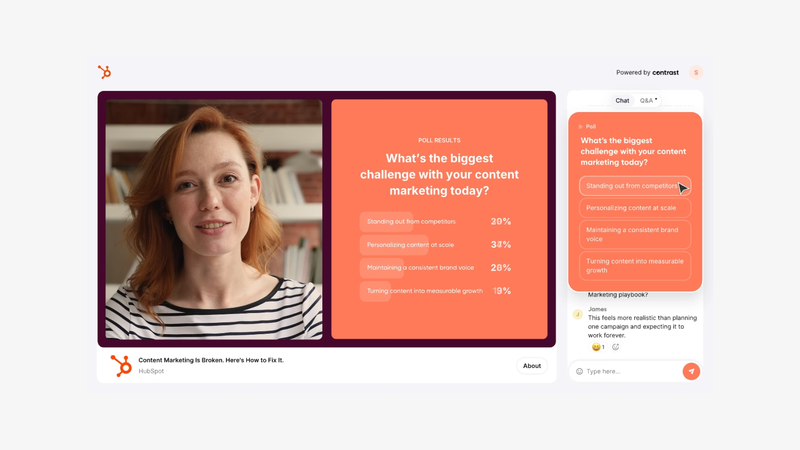
For teams whose webinars support a B2B content calendar, Contrast connects the event with HubSpot and the reuse of its recording. Native CRM activity helps inform follow-up, while AI-assisted written drafts and video clips can extend the replay. Evaluate that workflow against your GoTo program by testing presenter access, contact matching and the amount of review needed before sharing the resulting content.
Test the recording-to-content process and the contact activity that reaches HubSpot. Monthly unique registrants are a separate budget unit from live room capacity, so model sign-up volume before choosing an allowance.
Key features:
- Branded webinar registration.
- Reminder emails and calendar invitations.
- Studio branding and overlays.
- Live audience chat.
- Moderated Q&A.
- Audience polls and calls to action.
- Branded on-demand webinar channel.
- AI-assisted written content repurposing (Pro; allowances apply).
- AI-generated subtitled clips (Pro; allowances apply).
- Native HubSpot integration.
Best for: B2B content teams combining webinars, HubSpot follow-up and recording reuse.
Strengths: an integrated path from branded live delivery to CRM signals and reusable content.
Considerations: Pro uses monthly unique-registrant allowances, including people who register without attending. Advanced integrations, concurrent events and longer sessions can require a higher offer.
Pricing: Pro displays €79/month billed annually in the EUR browser configuration at 100 unique registrants per month (€948/year, calculated). The USD page displays $99/month billed annually for that allowance; currencies are separate regional offers, not conversions. Pro includes two-hour sessions and unlimited team members, webinars and hosts. The free offer allows 30 unique registrants per month and 30-minute sessions. Advanced and Enterprise use sales-led pricing. Registrants are not concurrent attendees; check monthly acquisition volume and AI allowances.
Why choose it over GoTo Webinar? Choose Contrast over GoTo Webinar when native HubSpot activity and AI-assisted content reuse is the priority and the relevant plan matches your event requirements.
7. EasyWebinar: Best for Evergreen funnels with integrated follow-up
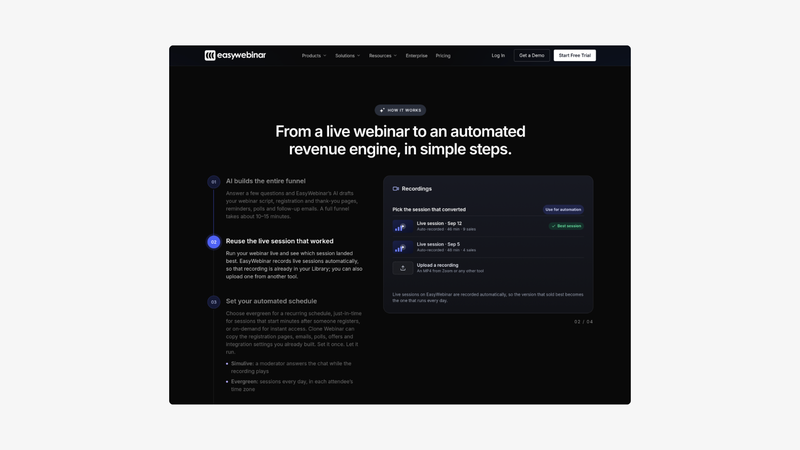
EasyWebinar is relevant when the webinar is one step in a repeatable sales or lead-generation campaign. Its higher plans bring together automated delivery, CRM follow-up and checkout, reducing the number of separate steps a team needs to coordinate.
The difference from GoTo Webinar is not simply the presence of automated webinars. Both products support automated formats. EasyWebinar’s appeal is the particular combination of evergreen sessions, behavior-based sequences and selling tools within the same product.
A team running a recurring demonstration can assess the full path: registration, viewing, a purchase or contact action, and the follow-up triggered afterward. Existing CRM users should check native connector availability before deciding that the bundled CRM is useful for their own setup.
Build one automated selling journey rather than testing video playback alone. Check how the campaign uses the total-webinar allowance and whether native CRM synchronization makes Pro necessary.
Key features:
- Live webinar delivery from Launch.
- Automated and evergreen sessions from Growth.
- Registration and thank-you pages.
- Recording and replay delivery.
- An AI campaign builder with usage allowances.
- EasyCRM contact and lead management from Growth.
- Behavior-based follow-up sequences from Growth.
- In-webinar checkout from Growth.
- EasyCast multistreaming from Growth.
- Native HubSpot and Salesforce Pardot synchronization from Pro.
Best for: teams building recurring automated webinar campaigns with integrated sales follow-up.
Strengths: automation, CRM and checkout available together on Growth and higher plans.
Considerations: Launch does not include automated delivery, while native HubSpot and Pardot synchronization requires Pro. The published total-webinar allowances also need to be matched to your campaign structure.
Pricing: Launch starts at $44/month with monthly billing for 50 live attendees. Growth starts at $116/month for 200 live attendees and includes automated formats; Pro costs $198/month for 500. The comparison grid lists total-webinar allowances of five, ten and fifteen respectively. Confirm how those allowances apply to your account rather than interpreting them as monthly live-session quotas. A standard seven-day trial is advertised. Annual discounts and temporary offers have separate conditions and should be compared against recurring prices.
Why choose it over GoTo Webinar? Choose EasyWebinar over GoTo Webinar when evergreen campaigns with integrated CRM follow-up and checkout is the priority and the relevant plan matches your event requirements.
How to Choose the Right GoTo Webinar Alternative
Use the Tier You Actually Need
For a hypothetical 500-viewer event requiring cloud recording and branded delivery, the current GoTo Webinar comparison points to Elevate, not Reach, even though Reach’s audience limit covers the room size. Ask other suppliers to price those same functions, session duration and organizer requirements. This prevents a comparison between a basic room and an advanced event package.
Check Existing Licenses Before Buying
An existing conferencing contract may change the practical cost of Zoom Webinars, but an eligible account and webinar license still need to be confirmed. Conversely, a standalone subscription may include functions your organization currently buys separately. Compare the incremental and total cost for your account, without assuming that an installed meeting app includes webinar hosting.
Preserve the Program’s Operational Details
Recreate one recurring event, including custom registration fields, reminder timing, speaker roles, questions, reports and replay access. If certificates or paid training are required, test the complete process on the relevant offer. An audience-capacity match alone does not establish a successful migration.
Verdict: Which GoTo Webinar Alternative Should You Choose?
Choose Sparkup when the change you need is a more deliberately produced, participatory live format. Choose a marketing or automation specialist when campaign follow-up or evergreen delivery is the constraint. Keep GoTo Webinar on the shortlist when its structured departmental workflow and higher-tier training options remain a strong fit; migration should solve a real problem.
For a production-led live format, compare Sparkup’s Webinar and Events plans and use the 14-day trial to rehearse a real event. For more context on the category, see our guide to webinar platforms.
FAQ
What is a good GoToWebinar alternative for live production?
Sparkup combines a browser-based webinar studio, polls within the video, invitations for attendees to speak and detailed engagement analytics. The participant mosaic is available on Events. Rehearse your actual format when comparing it with GoTo Webinar: evaluate the visual result and how easily participants can contribute.
What are the current GoTo Webinar plan names?
The current public lineup is Reach, Elevate and Complete. Older comparisons may use Lite, Standard or Pro. Check the current plan page and selected currency because capacities and included capabilities must be mapped to the present offers.
Is Zoom Webinars a direct replacement?
It can suit structured broadcasts in an existing Zoom environment, but verify eligible account requirements, audience capacity and the functions needed. Standard Webinars and Webinars Plus are distinct packages, with advanced production and simulive promoted under Plus.
Which alternative suits automated marketing campaigns?
EasyWebinar Growth combines automated delivery with CRM follow-up and checkout. WebinarGeek and Demio also offer automated formats under the relevant conditions. Compare the entire campaign and integration workflow rather than treating automation as a unique feature.
What should I transfer before leaving GoTo Webinar?
Inventory recordings, reports, registration data, upcoming events and required retention arrangements. Confirm export and access conditions, rebuild communications and test the destination’s reporting. Avoid changing registration links for an active event before the replacement is ready.